
Bell 3G Network Phase-Out
What RTK & GPS Users Should Be Aware Of
Bell is in the process of phasing out its 3G (HSPA) network across Canada, including here in Alberta.
As part of this transition, cellular service is moving to 4G LTE and 5G networks, which will support
improved coverage and long-term reliability.
While this change won’t affect everyone, it’s worth being aware if your tractor or guidance system
still communicates using a 3G-based modem, particularly for RTK corrections delivered via NTRIP.
Why This Matters for RTK Users
Many RTK-enabled systems rely on a cellular connection to receive correction data. As 3G coverage is gradually reduced,
equipment that depends on that network may begin to experience connectivity limitations over time.
Bell has indicated that the full retirement of the 3G network is expected by spring 2027, giving producers
time to understand whether their equipment may be affected and plan accordingly.
Possible Symptoms on 3G-Based Systems
- Intermittent connection to NTRIP or RTK services
- Difficulty retrieving RTCM or NTRIP correction data
- Temporary RTK dropouts
- Automatic fallback to lower-accuracy positioning (WAAS, SBAS, or no correction)
What to Look For on Your Terminal
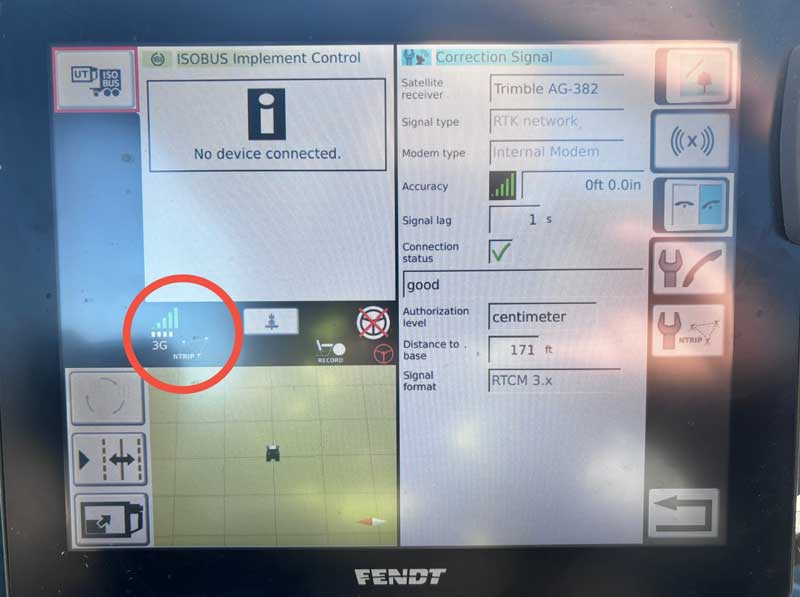
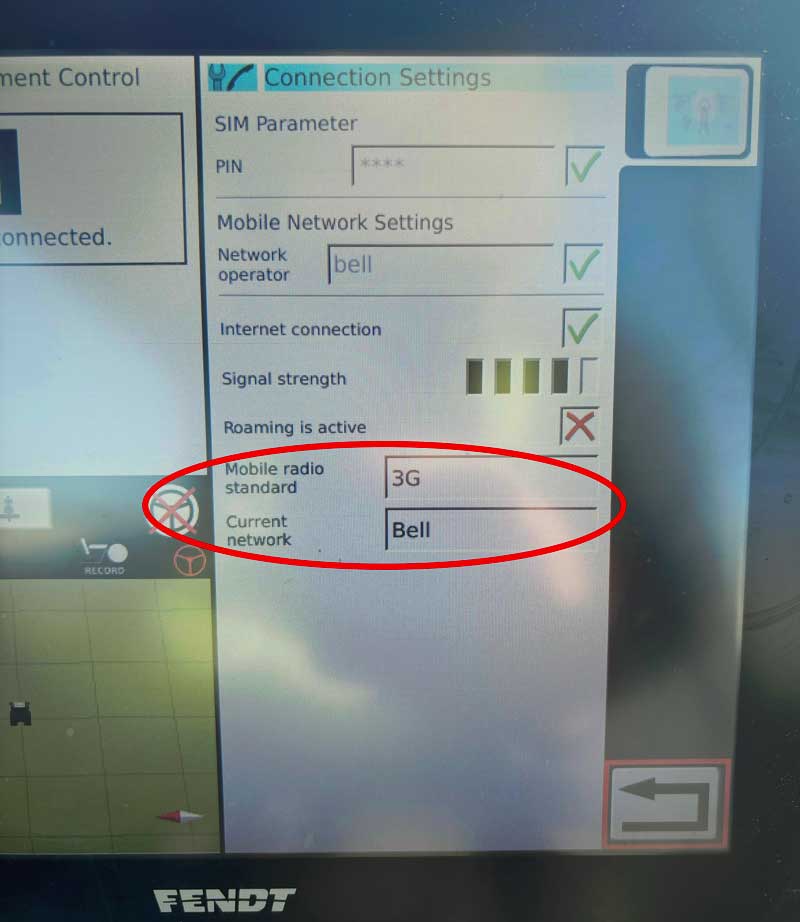
Not sure what type of modem your system is using? You can usually check directly on your in-cab display or GPS terminal.
In the system, receiver, or modem information screen, look for the cellular network type.
If 3G is listed, your system is operating on a 3G-based connection.
The example images below show where this information is commonly displayed.
Next Steps
At this stage, this is simply an informational heads-up. Checking what modem your equipment uses can help you stay informed and plan ahead.
If you’d like a hand reviewing your setup or understanding your options, we encourage you to reach out to Mike Parker.
Connecting sooner rather than later gives us a better chance to help you plan ahead and explore opportunities for upgrades while supplies and timing are favourable.